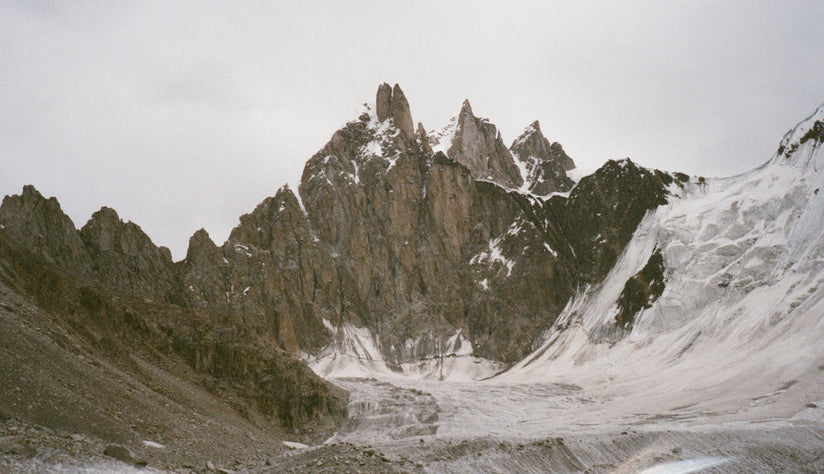
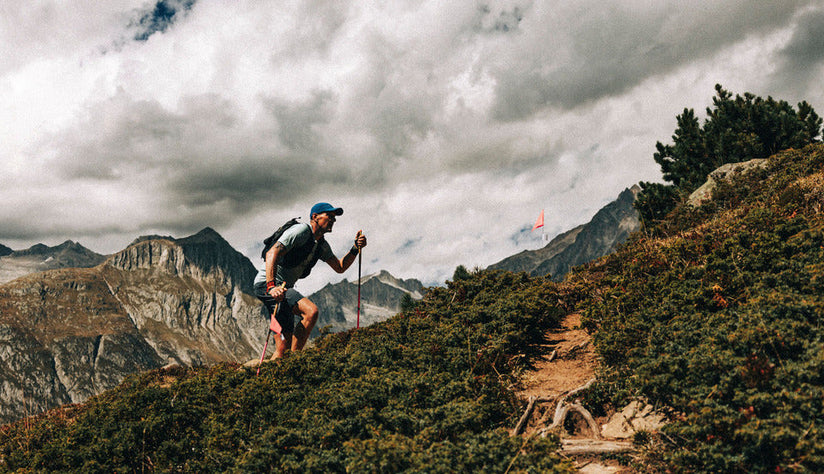
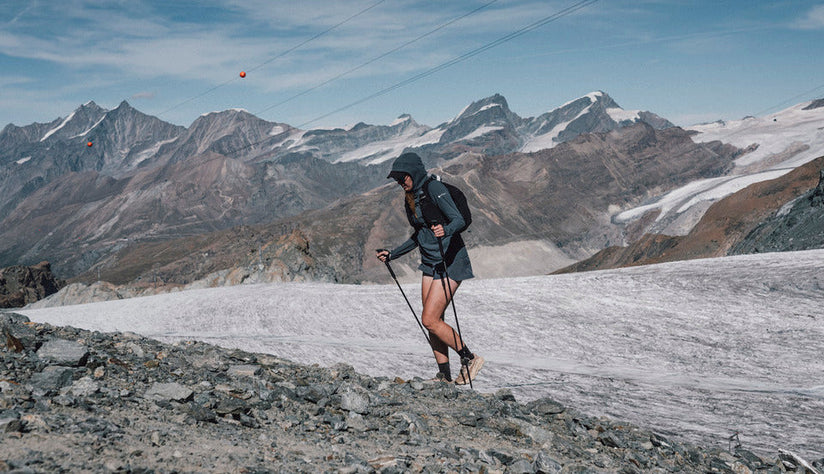
The expedition began under grey skies and persistent rain. Heavy weather in the valleys brought fresh snowfall higher in the mountains, transforming the landscape and reshaping the team's plans from the outset.
After several days trekking through dense forest, climbing high passes above 4,600m and slowly gaining altitude, Nici Burk and the team arrived in Khare at around 5,000m. Continued snowfall and unstable conditions meant additional days were spent waiting for the weather to improve. While not part of the original schedule, the extra time at altitude proved invaluable, allowing the team to acclimatise thoroughly before heading higher.

Once the route had been re-established, the team set off through deep snow towards Mera High Camp. Surrounded by vast Himalayan horizons, they were treated to unforgettable views of Makalu, Chamlang and countless snow-covered peaks that had captured their imagination throughout the approach.

Conditions at camp were unexpectedly calm. Mild temperatures and minimal wind provided a welcome reprieve, allowing for a comfortable night before the summit push.

Summit morning began beneath a spectacular Himalayan sunrise. With warm drinks, breakfast and clear skies, the team left camp and began the gradual ascent towards the summit of Mera Peak.

As the day progressed, temperatures remained relatively mild and winds stayed light, creating ideal conditions for climbing at altitude. Reaching the 6,461m summit was a significant milestone, made even more rewarding by the fact that almost the entire team stood together on top.

With Mera Peak complete, the original plan was to continue towards Baruntse Base Camp via the Mera La Pass. Attempting to break trail through deep, unconsolidated snow, the team worked alongside their porters to create a safe route across the pass. Progress was painfully slow. Even in established footsteps, the snow swallowed each step, making safe movement with heavy loads increasingly unrealistic.
After exploring every option available, the decision was made to turn around. The team returned to Khare to reassess their objectives and discuss what might come next.

Rather than pursue another objective in the Barun Valley, the expedition regrouped and retraced its steps back to Lukla. The journey took two days, providing time to reflect on a successful ascent of Mera Peak while beginning to look ahead to a new opportunity. During the trek back towards Lukla, conversations gradually shifted towards a new objective: Cholatse. With a decision made, the team once again set out on foot, travelling through Namche Bazaar, Phortse and Thare before eventually arriving beneath the striking walls of the mountain.

Completely alone beneath Cholatse, the team settled into a simple Base Camp setup. There was no large communal tent, no kitchen shelter and few comforts. Instead, days were filled with preparing equipment, clearing snow and making the most of life in the mountains. Evenings brought some welcome downtime, including a memorable marathon viewing of all three Lord of the Rings films.

With little sign of improving conditions, the team temporarily descended to Machhermo before returning to Base Camp several days later. On their return, a small team of Nepali climbers had arrived to establish a route towards Camp 1, providing a partially broken track through the deep snow. The team climbed to Camp 1 and established camp, ready to push higher the following day.

The first attempt quickly revealed the scale of the challenge ahead. Deep powder snow, hidden ice and fragile crusts made progress incredibly slow. Every pitch required extensive trail-breaking and route preparation.

Despite strong teamwork and determination, the conditions made any realistic summit attempt impossible. After five hard-fought pitches, the decision was made to retreat. The team returned to Camp 1 exhausted before descending all the way to Base Camp for recovery and reassessment.

After resting, the team decided to try again. This time, previous efforts paid dividends. Existing tracks and slightly improved conditions allowed for much smoother progress. Warmer rock on the south-facing ridge and firmer snow between sections helped maintain momentum, and the climbers soon moved beyond their previous high point.

After completing the main rock section and gaining a col below the upper mountain, the team paused to assess the terrain ahead. Looking towards the summit ridge, they considered the remaining challenge and made a measured decision.

They had already enjoyed exceptional climbing, moved well together and achieved what they had set out to experience. The summit could wait.

After descending back to Camp 1, Nici and her climbing partner Caro spent one final night high on the mountain. With no pressure to move quickly, they were able to enjoy a last evening in a remarkable place, watching the sun disappear behind the surrounding peaks and reflecting on the weeks that had come before. It felt like the perfect way to end their time on Cholatse.

The expedition ultimately became a story of adaptation. There were long waits for weather windows, difficult decisions, deep snow and repeated changes of plan. Progress was often slower than expected, and not every objective was achieved.

What remained were the experiences shared along the way: a successful ascent of Mera Peak, challenging and rewarding climbing on Cholatse, evenings spent laughing together in Base Camp and countless moments immersed in one of the world's greatest mountain environments.

For Nici, the trip was a reminder that success in the mountains is not always measured by summits alone. It's found in the ability to adapt, make good decisions, support your team and keep moving forward when conditions demand a different path.

Stats from the Expedition
• 5weeks in the Himalayas
• 250km travelled
• 16,000m of elevation gain
• 120 hours of recorded activity

Take a look at Nici's Kit:
Women's Alta XT Waterproof Jacket | Men's Alta XT Waterproof Jacket
Women's Alta Waterproof Pants | Men's Alta Waterproof Pants
Women's Kamen XT Down Jacket | Men's Kamen XT Down Jacket
Women's Apex 900 Down Jacket | Men's Apex 900 Down Jacket
Women's Fortes Lite Insulated Pants | Men's Fortes Lite Insulated Pants
Women's Dura Hooded Fleece Jacket | Men's Dura Hooded Fleece Jacket